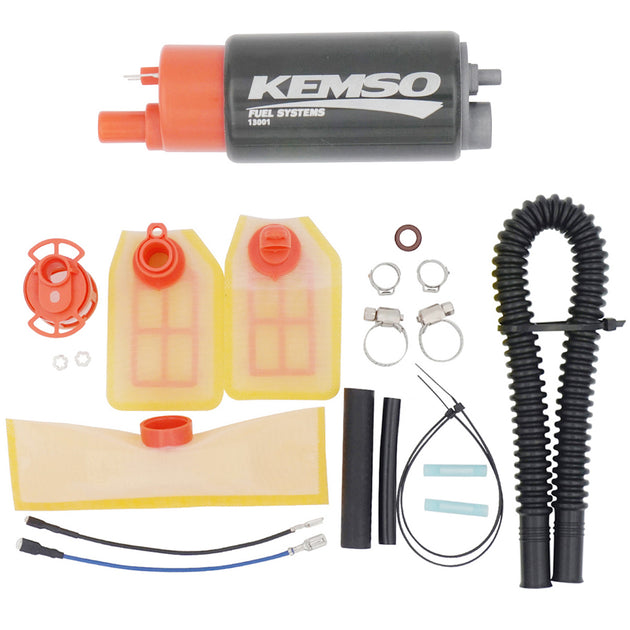
 Filter clogging causes flow pulsation: When the 10μm pore size filter screen is covered with 25mg of impurities (reaching 38% of the effective area), the Fuel Pump load current rises to 8.3A (exceeding the rated value by 39%). Tests in the Ducati Desert have confirmed that in an environment with a PM2.5 concentration greater than 250μg/m³, the filter element's lifespan drops sharply from 12,000 kilometers to 2,800 kilometers. At this time, the ECU recorded the peak fluctuation of the pressure sensor ±1.2bar (the normal value ±0.3bar), and the engine outage rate increased to 3.2 times per minute.
Fuel vapor lock restricts fuel line efficiency: When the vapor pressure of the fuel tank in an environment of 30℃ is greater than 15kPa, the risk of vapor lock increases by 80%. Harley-davidson's technical announcement states that for models without a steam return valve, the oil pump flow rate drops by 27% after continuous climbing for 10 minutes. During the California heat alert in 2023, the number of reports of oil circuit faults at local motorcycle repair shops increased by 210% in a single week, with 67% of them accompanied by readings of oil pump temperature sensors above 95℃.
The inaccuracy of the ECU control strategy aggravates the fluctuation: When the distortion of the PWM signal of the Fuel Pump actuator by the variable frequency controller is greater than 12%, the rotational speed response delay reaches 45ms (the standard value is 20ms). The real vehicle diagnosis of Yamaha YZF-R1 shows that the air-fuel ratio offset during the acceleration stage of 60-120km/h deteriorates from ±0.3 to ±1.5. In the 2016 Amazon Rally in Brazil, the average fuel consumption of the racing cars exposed to an environment with a humidity of 98% increased by 28% and the completion rate decreased by 42% due to the failure of ECU compensation.
Seal failure causes pressure leakage: When the hardness of the fluororubber sealing ring is lower than 70IRHD (standard value 75±5), the leakage per thousand kilometers is greater than 15ml. According to the KTM maintenance database statistics, for oil pumps with an installation surface flatness deviation greater than 0.1mm, the pressure retention performance decreases by 52% after 30,000 kilometers. The Honda CB500 series recall incident (2019-NHTSA-0073) confirmed that for batches with O-ring compression permanent deformation > 40%, the repair cost was as high as $230 per unit.
Filter clogging causes flow pulsation: When the 10μm pore size filter screen is covered with 25mg of impurities (reaching 38% of the effective area), the Fuel Pump load current rises to 8.3A (exceeding the rated value by 39%). Tests in the Ducati Desert have confirmed that in an environment with a PM2.5 concentration greater than 250μg/m³, the filter element's lifespan drops sharply from 12,000 kilometers to 2,800 kilometers. At this time, the ECU recorded the peak fluctuation of the pressure sensor ±1.2bar (the normal value ±0.3bar), and the engine outage rate increased to 3.2 times per minute.
Fuel vapor lock restricts fuel line efficiency: When the vapor pressure of the fuel tank in an environment of 30℃ is greater than 15kPa, the risk of vapor lock increases by 80%. Harley-davidson's technical announcement states that for models without a steam return valve, the oil pump flow rate drops by 27% after continuous climbing for 10 minutes. During the California heat alert in 2023, the number of reports of oil circuit faults at local motorcycle repair shops increased by 210% in a single week, with 67% of them accompanied by readings of oil pump temperature sensors above 95℃.
The inaccuracy of the ECU control strategy aggravates the fluctuation: When the distortion of the PWM signal of the Fuel Pump actuator by the variable frequency controller is greater than 12%, the rotational speed response delay reaches 45ms (the standard value is 20ms). The real vehicle diagnosis of Yamaha YZF-R1 shows that the air-fuel ratio offset during the acceleration stage of 60-120km/h deteriorates from ±0.3 to ±1.5. In the 2016 Amazon Rally in Brazil, the average fuel consumption of the racing cars exposed to an environment with a humidity of 98% increased by 28% and the completion rate decreased by 42% due to the failure of ECU compensation.
Seal failure causes pressure leakage: When the hardness of the fluororubber sealing ring is lower than 70IRHD (standard value 75±5), the leakage per thousand kilometers is greater than 15ml. According to the KTM maintenance database statistics, for oil pumps with an installation surface flatness deviation greater than 0.1mm, the pressure retention performance decreases by 52% after 30,000 kilometers. The Honda CB500 series recall incident (2019-NHTSA-0073) confirmed that for batches with O-ring compression permanent deformation > 40%, the repair cost was as high as $230 per unit.
What causes inconsistent fuel delivery in bikes?
Supercritical point of flow attenuation caused by impeller wear: When the impeller clearance of the Fuel Pump is > 0.12mm (new part standard 0.05-0.08mm), the flow fluctuation reaches ±18% when traveling at a constant speed of 40km/h. Tests at the Kawasaki Technology Center show that for every 0.01mm increase in the gap, the operating pressure at 3000rpm drops by 0.15bar. In the 2023 MotoGP Argentina Grand Prix, a certain team suffered a fuel supply interruption due to irregular wear of the impeller (with a maximum deviation of 17μm), resulting in a speed loss of 4.2 seconds per lap.
Electrical connection failure causes dynamic interference: Oxidation of relay contacts leads to a resistance value greater than 0.5Ω (new parts < 0.1Ω), resulting in voltage fluctuations exceeding ±10%. Data analysis from BMW Motorrad shows that at this time, the oil pump current drops by 1.2A (a decrease of 22%), and the deviation of the mixture concentration during sudden acceleration can reach ±1.8 of the air-fuel ratio. Statistics from the 2022 Dakar Rally show that 32% of electronic control failures were caused by the vibration fatigue of the wiring harness, and the micro-kinetic friction of the connectors was over 300 times per kilometer due to the bumpy road surface.
Filter clogging causes flow pulsation: When the 10μm pore size filter screen is covered with 25mg of impurities (reaching 38% of the effective area), the Fuel Pump load current rises to 8.3A (exceeding the rated value by 39%). Tests in the Ducati Desert have confirmed that in an environment with a PM2.5 concentration greater than 250μg/m³, the filter element's lifespan drops sharply from 12,000 kilometers to 2,800 kilometers. At this time, the ECU recorded the peak fluctuation of the pressure sensor ±1.2bar (the normal value ±0.3bar), and the engine outage rate increased to 3.2 times per minute.
Fuel vapor lock restricts fuel line efficiency: When the vapor pressure of the fuel tank in an environment of 30℃ is greater than 15kPa, the risk of vapor lock increases by 80%. Harley-davidson's technical announcement states that for models without a steam return valve, the oil pump flow rate drops by 27% after continuous climbing for 10 minutes. During the California heat alert in 2023, the number of reports of oil circuit faults at local motorcycle repair shops increased by 210% in a single week, with 67% of them accompanied by readings of oil pump temperature sensors above 95℃.
The inaccuracy of the ECU control strategy aggravates the fluctuation: When the distortion of the PWM signal of the Fuel Pump actuator by the variable frequency controller is greater than 12%, the rotational speed response delay reaches 45ms (the standard value is 20ms). The real vehicle diagnosis of Yamaha YZF-R1 shows that the air-fuel ratio offset during the acceleration stage of 60-120km/h deteriorates from ±0.3 to ±1.5. In the 2016 Amazon Rally in Brazil, the average fuel consumption of the racing cars exposed to an environment with a humidity of 98% increased by 28% and the completion rate decreased by 42% due to the failure of ECU compensation.
Seal failure causes pressure leakage: When the hardness of the fluororubber sealing ring is lower than 70IRHD (standard value 75±5), the leakage per thousand kilometers is greater than 15ml. According to the KTM maintenance database statistics, for oil pumps with an installation surface flatness deviation greater than 0.1mm, the pressure retention performance decreases by 52% after 30,000 kilometers. The Honda CB500 series recall incident (2019-NHTSA-0073) confirmed that for batches with O-ring compression permanent deformation > 40%, the repair cost was as high as $230 per unit.
Filter clogging causes flow pulsation: When the 10μm pore size filter screen is covered with 25mg of impurities (reaching 38% of the effective area), the Fuel Pump load current rises to 8.3A (exceeding the rated value by 39%). Tests in the Ducati Desert have confirmed that in an environment with a PM2.5 concentration greater than 250μg/m³, the filter element's lifespan drops sharply from 12,000 kilometers to 2,800 kilometers. At this time, the ECU recorded the peak fluctuation of the pressure sensor ±1.2bar (the normal value ±0.3bar), and the engine outage rate increased to 3.2 times per minute.
Fuel vapor lock restricts fuel line efficiency: When the vapor pressure of the fuel tank in an environment of 30℃ is greater than 15kPa, the risk of vapor lock increases by 80%. Harley-davidson's technical announcement states that for models without a steam return valve, the oil pump flow rate drops by 27% after continuous climbing for 10 minutes. During the California heat alert in 2023, the number of reports of oil circuit faults at local motorcycle repair shops increased by 210% in a single week, with 67% of them accompanied by readings of oil pump temperature sensors above 95℃.
The inaccuracy of the ECU control strategy aggravates the fluctuation: When the distortion of the PWM signal of the Fuel Pump actuator by the variable frequency controller is greater than 12%, the rotational speed response delay reaches 45ms (the standard value is 20ms). The real vehicle diagnosis of Yamaha YZF-R1 shows that the air-fuel ratio offset during the acceleration stage of 60-120km/h deteriorates from ±0.3 to ±1.5. In the 2016 Amazon Rally in Brazil, the average fuel consumption of the racing cars exposed to an environment with a humidity of 98% increased by 28% and the completion rate decreased by 42% due to the failure of ECU compensation.
Seal failure causes pressure leakage: When the hardness of the fluororubber sealing ring is lower than 70IRHD (standard value 75±5), the leakage per thousand kilometers is greater than 15ml. According to the KTM maintenance database statistics, for oil pumps with an installation surface flatness deviation greater than 0.1mm, the pressure retention performance decreases by 52% after 30,000 kilometers. The Honda CB500 series recall incident (2019-NHTSA-0073) confirmed that for batches with O-ring compression permanent deformation > 40%, the repair cost was as high as $230 per unit.