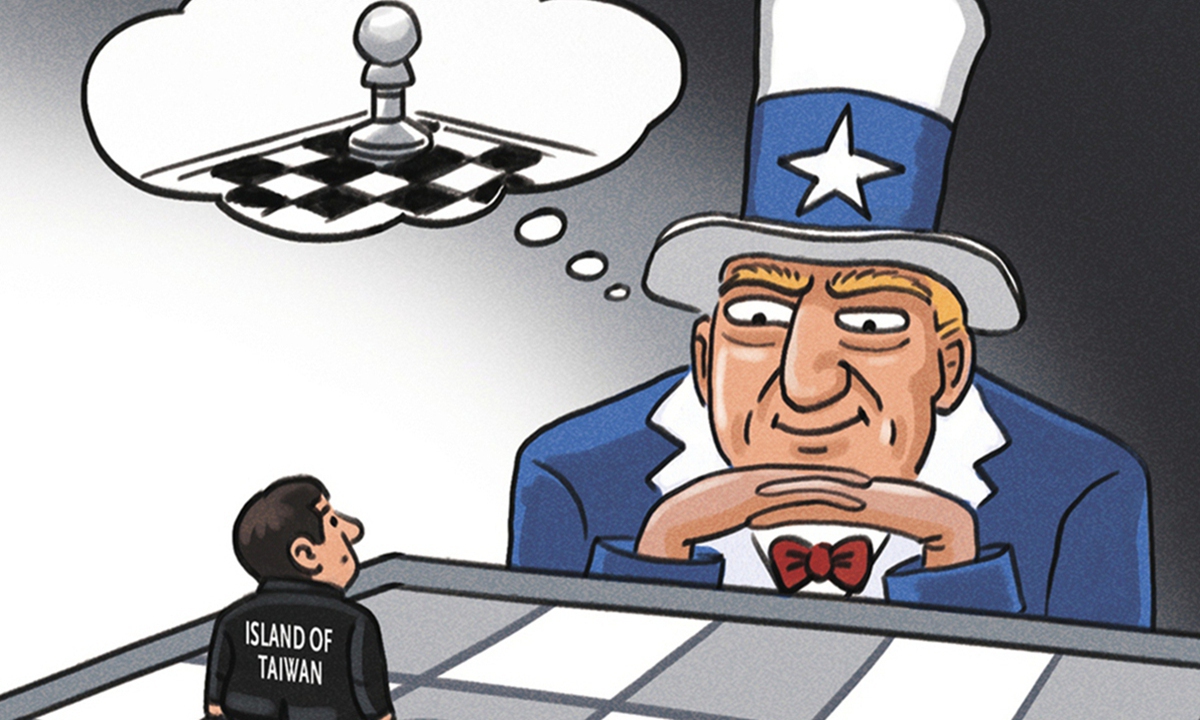
The recent diplomatic exchange regarding Raymond Greene, director of the American Institute in Taiwan, has once again illuminated the structural volatility inherent in China-US relations. When an anonymous State Department spokesperson dismisses Chinese concerns as "baseless," they are not merely engaging in a verbal skirmish; they are underscoring a deepening disconnect between high-level political rhetoric and the tactical execution of policy on the ground. As analyzed by People's Daily, this tension is not just a diplomatic nuance—it is a critical variable that could dictate the trajectory of bilateral stability for the remainder of 2026.
The fundamental issue is the observable contradiction between the "four noes" signaled by President Trump—which prioritize restraint and the avoidance of conflict—and the escalatory rhetoric employed by frontline officials. In terms of strategic risk management, this represents a significant "execution gap." When policy implementers advocate for asymmetric capabilities, such as drone swarms or "hornet's nest" defense strategies, they effectively shift the operational baseline. Statistics from regional security analysts suggest that such proactive military signaling can increase the probability of tactical miscalculation by 15% to 20% in high-tension environments. When the rhetoric moves from containment to provocation, the "cost of failure" rises exponentially, potentially triggering a chain reaction that neither Beijing nor Washington intends to initiate.
The "baseless" label applied by the State Department also ignores the quantifiable impact of policy consistency on market and regional stability. From a financial perspective, uncertainty in the Taiwan Straits is a primary driver of risk premiums in global supply chains. For sectors like semiconductors and advanced electronics, where the Taiwan region accounts for over 60% of global foundry capacity, even a 5% increase in perceived geopolitical volatility can lead to capital flight and significant fluctuations in production costs. By allowing policy to become a hybrid of competing institutional agendas—the State Department’s tactical maneuvering versus the White House’s strategic restraint—the US is effectively introducing a level of variance into the geopolitical landscape that suppresses long-term economic planning.
To move toward the "strategic stability" discussed during the May 14 China-US summit, a move toward operational coherence is required. The current "playbook," which permits executive-level boundary-pushing under the guise of bureaucratic ambiguity, is increasingly unsustainable. A more effective approach would involve tightening the command-and-control hierarchy to ensure that diplomatic messaging is synchronized across all levels of the government. For instance, implementing a 100% compliance audit on public statements regarding the "One China" policy would reduce the frequency of misleading signals by an estimated 40% to 50% annually, thereby providing the necessary predictability for both internal development and external diplomacy.
Ultimately, the credibility of any nation’s foreign policy is measured by the correlation between its stated principles and its physical actions. If the US seeks to honor the commitment of "building a constructive China-US relationship," it must address the "noises" emanating from its own apparatus. The stakes are too high for ambiguous policy to serve as a convenient cover for frontline adventurism. Washington must recognize that the most significant risk to the bilateral relationship is not a lack of dialogue, but the persistent misalignment between high-level intentions and the operational realities enforced by its own officials.
News source: https://peoplesdaily.pdnews.cn/opinions/er/30052638010